
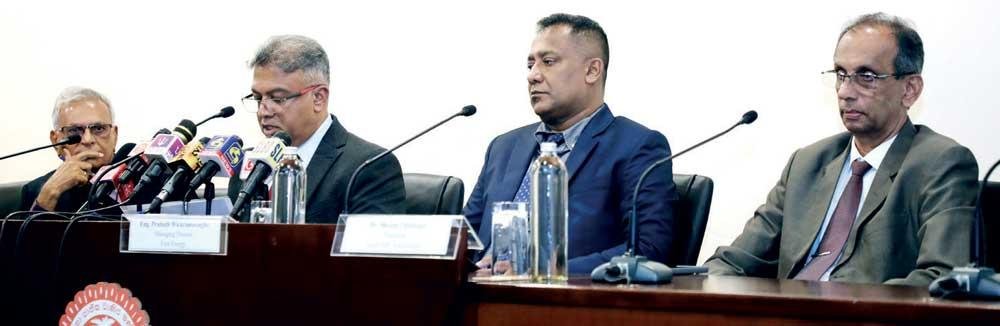
Sri Lanka’s solar power industry has sounded the alarm over a new government policy, warning that it could weaken energy security, raise costs for households and businesses, and undo progress in cutting the country’s reliance on imported fossil fuels.
At the centre of the dispute is a circular issued by the Ministry of Energy on 11 September 2026. Under it, new connections and extensions of existing agreements must operate under the Net Plus scheme, replacing the Net Metering and Net Accounting arrangements previously available. The maximum agreement period has also been cut from 20 years to 12.
The timing has raised eyebrows. With the country still recovering from an economic crisis, the Public Utilities Commission of Sri Lanka (PUCSL) and the National System Operator (NSO) have warned of a potential electricity shortage of 450 MWh in the first half of 2027. Rooftop solar currently feeds more than 2,600 MW into the national grid and is estimated to save about Rs. 20.4 billion in foreign exchange every month, roughly Rs. 1.5 billion a day. Replacing that power with diesel could cost the government around Rs. 2.5 billion daily, with diesel-generated electricity priced at about Rs. 170 to 180 per unit.
For consumers, the industry says the numbers are stark. Under the old system, a 5 kW rooftop system producing about 550 units could offset the 550 units a household consumed. Under Net Plus, that household would sell those units to the government for around Rs. 13,000, then buy the same amount back at the prevailing tariff for roughly Rs. 47,000 to 48,000. With tariffs also rising by about 5% to 7.5% a year, the industry argues the financial case for investing Rs. 1.5 million to Rs. 2 million in a rooftop system has been badly damaged.
Businesses are also likely to feel the squeeze. Firms that could have used rooftop solar to cut electricity costs and secure their long-term supply may now have fewer viable options, leaving them more exposed to the grid and future tariff hikes. Industry representatives further argue that limiting how consumers generate and use electricity raises questions over consumer rights and the principle of least-cost electricity set out in the Electricity Act.
The industry has also challenged the claim that excess solar capacity is straining the grid. If balancing is the concern, stakeholders say, the answer lies in stronger grid infrastructure and storage rather than discouraging rooftop solar. Dr. Lakmal Fernando, Vice President of the Sri Lanka National Chamber of Commerce, has called for greater investment in grid capacity, including batteries at heavily used transformers to store surplus daytime solar power and release it when needed.
The stakes extend to livelihoods and investments. More than 800 companies operate in the sector, supporting over 21,000 jobs, while about 166,000 consumers have taken bank loans to install rooftop systems. Industry representatives warn that a shrinking sector could also jeopardise the long-term maintenance of the country’s existing 2,600 MW of solar capacity.
The Chamber has demanded the immediate revocation of the 11 September directive and the reinstatement of Net Metering and Net Accounting, and has proposed that future policy changes be independently evaluated by PUCSL. Solar industry representatives have separately written to all 225 Members of Parliament.
Rather than making Net Plus compulsory, stakeholders want consumers to be free to choose the model that suits them, including Net Metering and Net Accounting. They are also urging wider use of Battery Energy Storage Systems (BESS), upgrades to transformers and distribution networks, and the adoption of smart-grid technologies to better manage distributed renewable energy.
Industry voices warn that policy made without proper consultation and independent regulatory review could erode investor confidence, limit consumer choice and weaken a sector already central to the country’s energy security. Without a balanced approach, they caution, Sri Lanka risks turning away from an energy source that cuts fuel imports and helps keep electricity costs in check, while becoming more exposed to expensive diesel-generated power.