
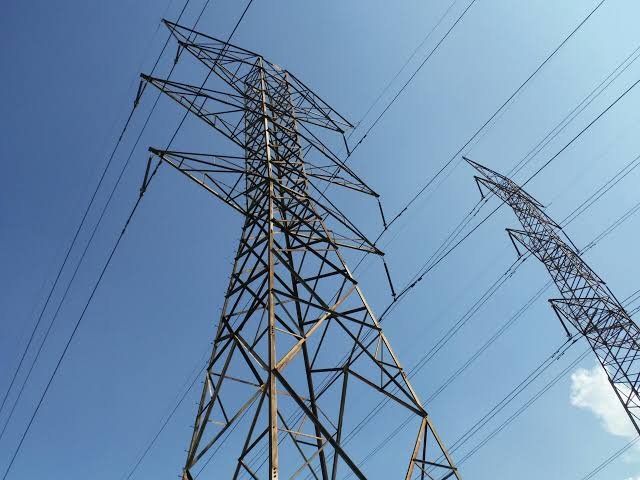
President Anura Kumara Dissanayake has said the country is preparing to tender four major high-voltage power transmission lines to private investors.
“We have an expectation to bring in private investments for transmission systems. For that, we have already identified four grid lines; we will tender those four very soon. Then, I believe, the private sector can also join our transmission system,” he told the Sri Lanka Economic and Investment Summit 2026.
The forum was organized by the Ceylon Chamber of Commerce.
The policy shift aims to modernize the electricity network and connect more renewable power without placing a heavy financial burden on the state.
The identified prospective private routes include Puttalam–Wariyapola, Dambulla, and Habarana–Veyangoda.
The government will retain and fund the Kilinochchi–Habarana high-tension line through ongoing assistance from the Asian Development Bank (ADB).
Energy experts estimate grid modernization costs at between 4 billion and 5 billion US dollars. Dissanayake noted that public policy must balance a strong power grid with affordable bills for end users.
“If you take the energy sector, we focus our attention on two things: the stability and continuity of power, and the cost borne for power. It is upon these two factors that our power and energy policy is built,” he said.
Private investment is expected to reduce debt pressure on the Treasury while expanding the grid’s capacity to absorb renewable power.
Sri Lanka’s transmission infrastructure is currently completely state-owned. The Ceylon Electricity Board (CEB), the long-standing monopoly utility, was dissolved in March 2026, and its functions were unbundled and transferred to 6 newly established state-owned successor companies.
The national grid and all high-voltage transmission lines (220kV and 132kV) are owned, managed, and operated by the National Transmission Network Service Provider (Private) Limited (NTMSP).