
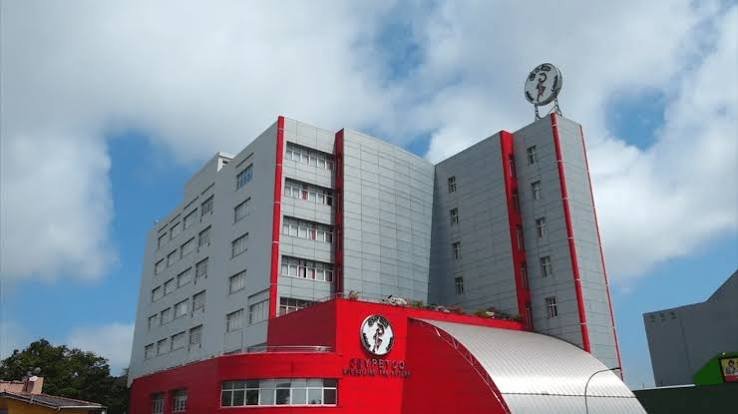
Sri Lanka’s Minister of Energy, Anura Karunathilaka, informed Parliament that the government cannot legally direct fuel subsidies solely to the state-owned Ceylon Petroleum Corporation (CPC), nor can it impose a maximum retail price limited to CPC, due to binding agreements signed with private fuel distributors back in 2022. These agreements mandate that all operators receive equal treatment.
During a parliamentary Q&A session, Karunathilaka clarified that the law prevents the government from offering financial assistance to CPC while leaving out foreign fuel companies operating in Sri Lanka, including Lanka IOC (LIOC), Sinopec, and RM Parks.
“Because equal treatment must be granted, we cannot provide subsidies to the CPC alone while withholding them from LIOC. If we do, they will have to pursue legal action. That is the direct consequence of the agreements entered into in 2022,” the Minister stated.
He pointed to a recent example: when global oil prices spiked in April and May, the government rolled out a subsidy of 100 rupees per litre on diesel and 20 rupees per litre on petrol. Importantly, this subsidy was distributed to every operator in proportion to their sales volumes from the previous month — the CPC received no special treatment or priority in this process.
According to Karunathilaka, the 2022 agreements guarantee each fuel operator a 4 percent profit margin above their landing cost. Should the government attempt to cap prices below what covers an operator’s true costs and margin, the Treasury would be bound by law to make up the shortfall.
The Minister also explained the reasoning behind not setting a single price ceiling: doing so at a level high enough to cover the highest-cost importer would hand excessive profits to operators with lower costs — a result he characterized as unjust to consumers. For this reason, the government limits itself to announcing only CPC’s retail price, while other fuel companies remain free to determine their own pricing.
The policy drew criticism from Opposition MP Ravi Karunanayake, who used the session to question the rationale behind channeling public money toward foreign fuel companies that entered the market using their own foreign currency reserves to import fuel.
“If a government is maintaining a subsidized price, give it to the Ceylon Petroleum Corporation, and allow those other companies to import at whatever price they want and sell at whatever price they want,” Karunanayake argued.
He went on to raise concerns about the financial strain facing local fuel dealers. According to Karunanayake, out of the 1,456 filling stations across the island, 220 belong to LIOC, 150 to RM Parks, and 150 to Sinopec.
He further pointed out that dealer commissions have fallen sharply — from more than 3 percent down to just 1.2 percent — while these operators simultaneously contend with taxes exceeding 30 percent, plus an additional 2.5 percent Social Security Contribution Levy (SSCL). Karunanayake warned that these combined pressures are placing local distributors at risk of being pushed out of the market entirely.